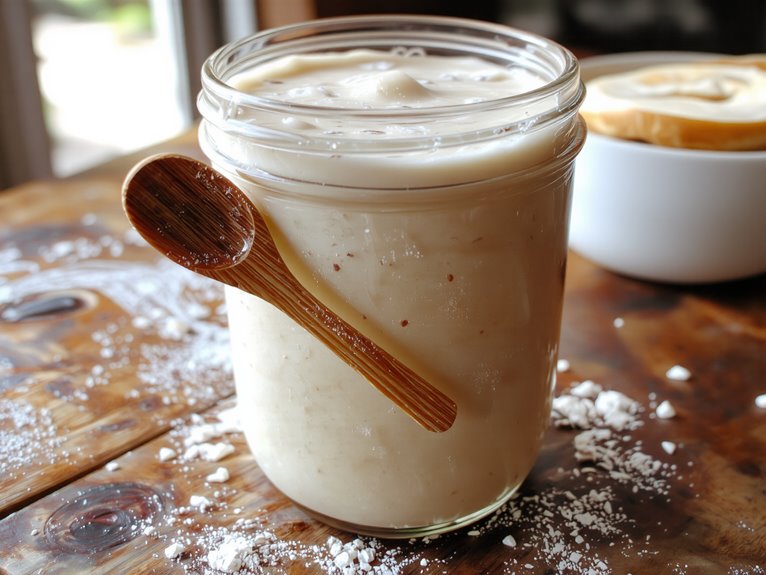
The Best Homemade Sourdough Starter Recipe
What You’ll Love About This Recipe
Making your own sourdough starter is easier than you think, and the results are totally worth it. You’ll love how it transforms simple ingredients into something magical, creates a natural, tangy flavor, and connects you to a centuries-old tradition. Plus, it’s a fun project that lets you feel like a baking pro in your own kitchen.
Recipe
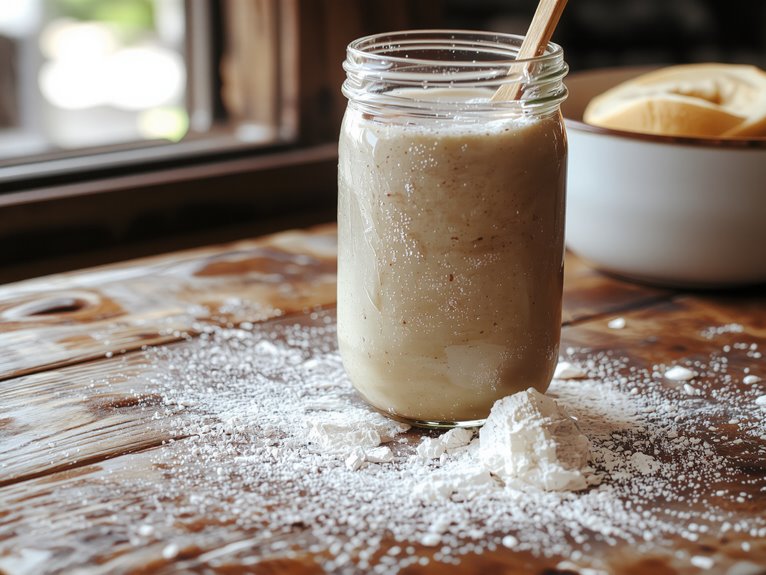
Making your own sourdough starter from scratch is simpler than it seems, and it only requires flour and water. With patience and a little care, you can cultivate a living culture that will bring depth and flavor to your homemade bread. This recipe guides you through the process step by step.
Ingredients:
- 1 cup (120g) whole wheat flour or unbleached all-purpose flour
- 1/2 cup (120ml) lukewarm water
Instructions:
- Day 1: In a clean jar or bowl, mix 1 cup of flour with 1/2 cup of lukewarm water until fully combined. The mixture should be thick but stirrable. Cover loosely with a lid or cloth and let it sit at room temperature for 24 hours.
- Day 2: Discard half of the starter mixture (about 1/2 cup) and feed it with 1/2 cup of fresh flour and 1/4 cup of lukewarm water. Stir well, cover, and let it rest for another 24 hours.
- Day 3: Repeat the process: discard half the starter, feed it with 1/2 cup flour and 1/4 cup water, stir, cover, and let it rest overnight.
- Days 4–7: Continue discarding and feeding the starter daily. Look for bubbles and a slightly sour aroma, indicating fermentation is active. By day 7, your starter should be ready to use.
Notes:
- Store the starter in a glass or ceramic container. Avoid metal bowls.
- If your starter isn’t active by day 7, continue feeding it daily until it becomes bubbly and doubles in size within 4–8 hours of feeding.
Equipment:
- Glass jar or bowl
- Measuring cups or kitchen scale
Time:
Prep time: 5 minutes daily
Cook time: None
Cuisine: Baking
Serving: Makes approximately 1 cup of sourdough starter
Nutrition
Sourdough starter is a simple mixture of flour and water that ferments over time, creating natural yeast and bacteria. It is a key ingredient in sourdough bread, adding flavor and aiding in the rise.
| Nutrient | Amount per 100g |
|---|---|
| Calories | 150 kcal |
| Carbohydrates | 30 g |
| Protein | 5 g |
| Fat | 0.5 g |
| Fiber | 2 g |
| Sugar | 0 g |
| Sodium | 0 mg |
What To Serve With It
I love pairing homemade sourdough with hearty soups, like creamy tomato or classic vegetable, because it’s perfect for dipping. For bread pairings, I often slice it thick and toast it, adding butter, jam, or even avocado for extra flavor. Nothing beats the combo of warm sourdough and a comforting meal.
Bread Pairings
There’s nothing like tearing into a warm slice of sourdough, but what you serve with it can take that first bite from good to unforgettable. I love pairing it with a carefully curated cheese platter—think creamy brie, sharp cheddar, and tangy blue cheese. Add some honey or fig jam for a touch of sweetness. A well-chosen wine selection elevates the experience; a crisp Sauvignon Blanc or a rich Cabernet Sauvignon complements sourdough beautifully. Sometimes, I’ll keep it simple with a smear of butter and a sprinkle of sea salt. The possibilities are endless, and every combination feels like a mini celebration.
Soup Accompaniments
A hot bowl of soup and a slice of sourdough make the perfect cozy duo, especially on chilly days. I love tearing into crusty rolls or warm biscuits alongside a steaming bowl—they’re ideal for soaking up every last drop. My go-to is a simple sourdough boule, but sometimes I’ll bake mini rolls for dipping. If I’m feeling fancy, I’ll whip up cheddar-studded biscuits for extra richness. The tangy sourdough balances creamy soups like chowder, while heartier stews pair beautifully with a rustic loaf. Don’t forget to toast leftovers for crunch—it’s a game-changer!
About The Author