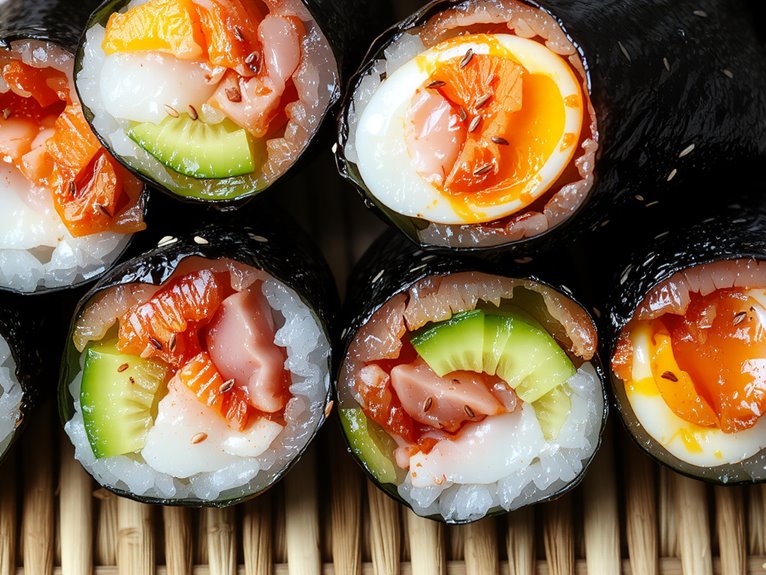
The Best Homemade Kimbap Recipe
What You’ll Love About This Recipe
Making homemade kimbap is not only easy but also a fun way to bring a taste of Korea into your kitchen. Whether you’re a beginner or a seasoned cook, this recipe is sure to become a favorite.
- It’s customizable, so you can fill your rolls with your favorite ingredients, making it perfect for picky eaters or special diets.
- The rolling process feels like a mini art project, turning simple ingredients into beautiful, bite-sized pieces of deliciousness.
- It’s a great meal prep option, staying fresh for snacks or lunches all week long.
Recipe
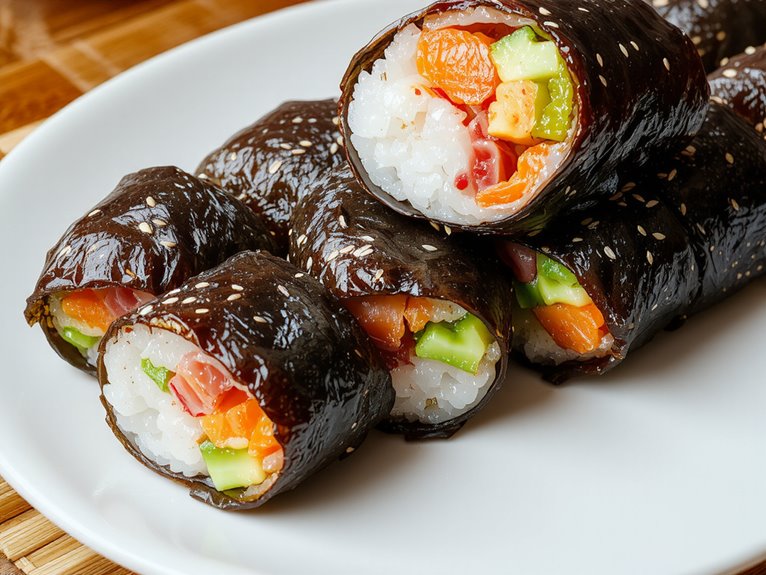
Kimbap, a popular Korean dish, is a delicious and versatile rice roll filled with various ingredients, perfect for lunchboxes or snacks. It’s easy to make at home and customizable to suit your taste.
Ingredients:
- 4 cups cooked short-grain rice
- 4 sheets of roasted seaweed (gim)
- 1 tablespoon sesame oil
- 1 teaspoon sesame seeds
- 1 small carrot, julienned
- 1/2 cucumber, julienned
- 4 strips of yellow pickled radish (danmuji)
- 4 slices of ham or cooked bulgogi
- 2 eggs, beaten and cooked into an omelet, then sliced
- A pinch of salt
Instructions:
- Season the cooked rice with sesame oil, sesame seeds, and a pinch of salt. Mix gently and set aside.
- Prepare all the fillings by slicing them into thin, even strips.
- Lay a bamboo sushi mat on a flat surface and place a sheet of roasted seaweed on it, shiny side down.
- Spread about 1 cup of seasoned rice evenly over the seaweed, leaving a 1-inch border at the top.
- Arrange the fillings horizontally in the center of the rice.
- Roll the seaweed tightly using the bamboo mat, starting from the bottom edge. Apply gentle pressure to secure the roll.
- Once rolled, seal the edge with a bit of water or rice glue.
- Repeat with the remaining ingredients.
- Slice each roll into 1-inch pieces using a sharp knife, wiping the blade between cuts for clean slices.
Notes:
- Use fresh ingredients for the best taste and texture.
- Wet the knife frequently to prevent sticking while cutting.
Equipment:
- Bamboo sushi mat
- Sharp knife
Time:
- Prep time: 20 minutes
- Cooking time: 10 minutes
Cuisine:
Korean
Serving:
Makes 4 rolls (about 24 pieces)
Nutrition
Kimbap is a nutrient-dense dish packed with a variety of ingredients. Here’s a breakdown of its nutritional value per serving.
| Nutrient | Amount per Serving |
|---|---|
| Calories | 250 kcal |
| Carbohydrates | 35 g |
| Protein | 8 g |
| Fat | 6 g |
| Fiber | 3 g |
| Sodium | 500 mg |
What To Serve With It
I love pairing my homemade kimbap with side dishes like kimchi or miso soup, as they balance the flavors perfectly. A cold barley tea or a fizzy drink complements the meal without overpowering it. You can mix and match these options to suit your taste and make it a complete dining experience!
Complementary Side Dishes
If you’re looking to round out your homemade kimbap meal, I’ve got some tasty ideas that’ll make it even more enjoyable. Kimchi is always a win—its tangy, spicy kick balances the mild flavors of kimbap perfectly. I also love adding a simple spinach salad, lightly seasoned with sesame oil and garlic. Pickled radishes bring a sweet and sour crunch, while steamed egg rolls add a soft, savory touch. Don’t forget miso soup—it’s comforting and pairs beautifully. These sides are easy to prep and bring variety to your table, making your meal feel complete and extra special.
Perfect Beverage Pairings
After enjoying the sides, let’s talk about what to sip alongside your kimbap for the full experience. I love pairing it with a cold cup of barley tea—it’s nutty, invigorating, and balances the savory flavors perfectly. If you’re in the mood for something fizzy, try a light, citrusy soda like Sprite or a Korean melon soda. For a cozy vibe, green tea works wonders, adding a gentle earthiness. Personally, I sometimes go for a chilled glass of soju or makgeolli when I’m feeling festive. Whatever you choose, make sure it complements the kimbap without overpowering its delicious simplicity!
About The Author